Begin With the Function, Not the Finish
Choosing between custom glass manufacturers begins with a precise understanding of what the component must accomplish. A decorative shade, a structural panel, and a sculptural lighting element may all use glass, but they impose very different demands on thickness, weight, heat resistance, light diffusion, and mounting. Before discussing colors or textures, a useful project brief identifies dimensions, intended environment, connection points, production volume, and acceptable tolerances. This functional foundation helps the manufacturer assess feasibility and recommend a production method that supports both the design and its practical role.
The initial conversation can also reveal how deeply a supplier engages with development. Experienced teams do more than reproduce a drawing: they examine where stress may occur, how handmade variations could affect assembly, and whether the desired geometry can be repeated consistently. Clear questions about prototypes, molds, tolerances, testing, and quality controls indicate a structured process. This is especially important when glass must integrate with metal frames, electrical fittings, or modular systems, where even a visually minor dimensional difference can complicate installation.
Evaluate Craft, Engineering, and Communication Together
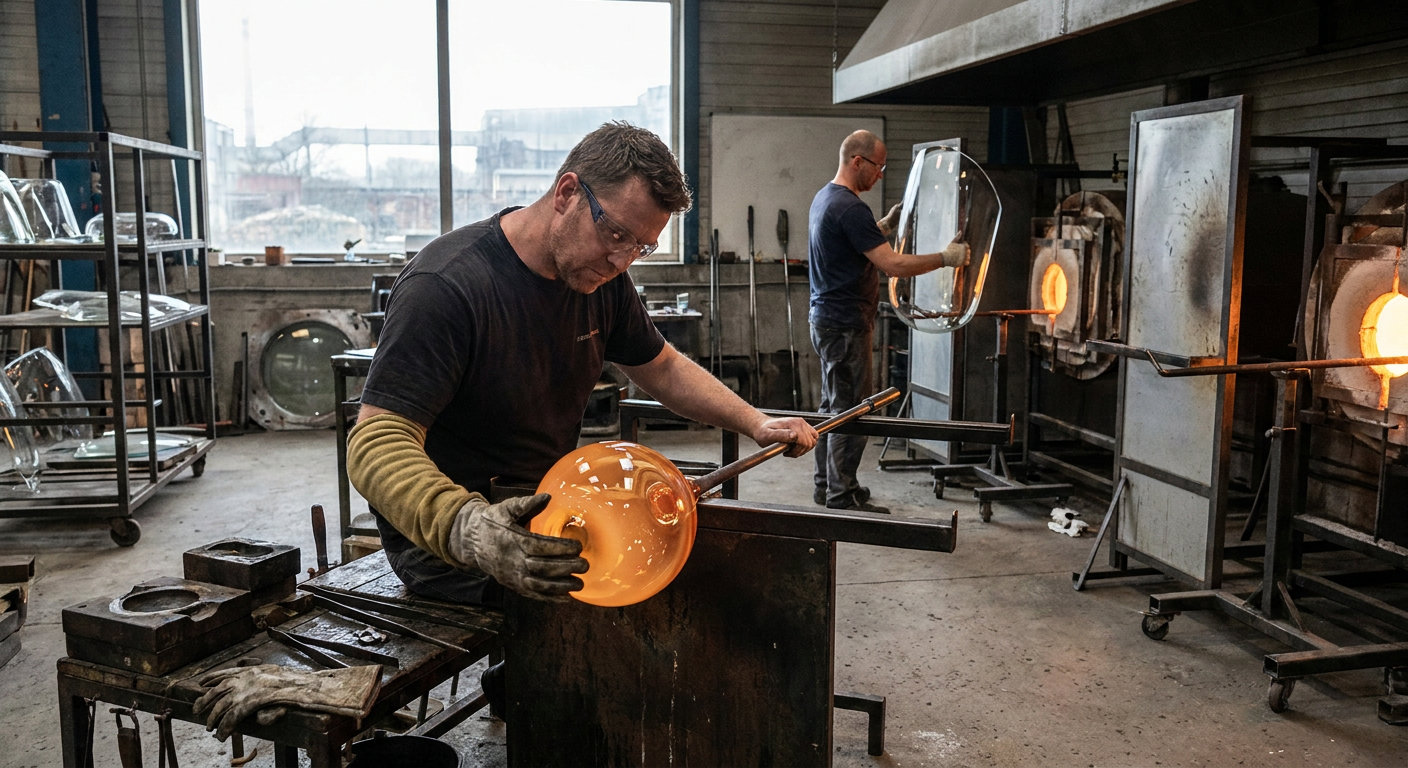
A strong partner combines material knowledge with responsive project management. Portfolios can demonstrate aesthetic range, but they should be considered alongside technical capabilities and experience with comparable applications. For example, Venetian custom glass manufacturers may unite traditional hand-forming expertise with contemporary development processes for bespoke lighting components. That combination can be valuable when a project requires distinctive surfaces or organic forms while still demanding reliable interfaces, repeatable dimensions, and compatibility with a larger product.
Sampling is often the point at which an attractive concept becomes a workable specification. A physical prototype can clarify color density, translucency, wall thickness, surface character, and the way light moves through the material. It also allows designers and technical teams to review practical details that renders may hide, including weight distribution and attachment areas. Reliable custom glass manufacturers document approved samples carefully, explain which variations are inherent to the chosen process, and establish realistic expectations before wider production begins.
Match the Manufacturing Approach to the Use Case
In hospitality interiors, bespoke glass may create a recognizable visual rhythm across chandeliers, wall lights, and decorative installations. Residential collections often require smaller components that feel individual while remaining coherent across multiple products. Retail and public spaces may call for larger statement pieces, coordinated replacements, or glass engineered around specific support systems. In each case, the right manufacturing approach depends on whether the priority is expressive individuality, close repetition, efficient assembly, or a considered balance of all three.
Selection should therefore consider the entire project journey rather than the beauty of a single sample. Production capacity, packaging, international delivery experience, replacement planning, and communication during revisions can influence the final outcome as much as furnace technique. The most suitable custom glass manufacturers translate creative intent into clear production decisions without removing the character that made glass desirable in the first place. When design ambition, engineering discipline, and manufacturing reality are aligned early, bespoke components can contribute lasting identity as well as dependable performance.

